Oxidation and reduction by electrons
Oxidation without oxygen
1. Properties of iron
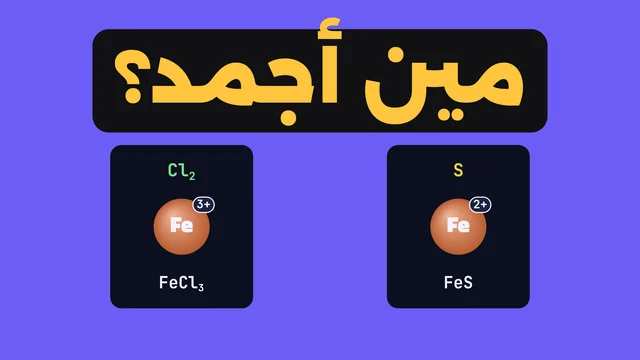
2. Oxidation without oxygen?
In Chapter 1, Fe²⁺ changes to Fe³⁺. No oxygen is gained, yet the book calls it oxidation.
Pick the right answer
Predict: what happened to the iron ion?
- A. It lost one electron
- B. It gained one electron
- C. Nothing: without oxygen it cannot be oxidation
Explanation
Going from Fe²⁺ to Fe³⁺, the ion loses one electron. Oxidation is loss of electrons, so this is oxidation even without oxygen.
3. Oxidation: loss of electrons
Remember: you met oxidation as gain of oxygen. Here is a wider meaning.
Oxidation
A process in which an atom or ion loses electrons, so its oxidation state increases.
Fe²⁺ → Fe³⁺ + e-
Gaining oxygen is one case of this. In MgO, Mg has lost two electrons to oxygen: 0 → +2.
4. Reduction: gain of electrons
Reduction
A process in which an atom or ion gains electrons, so its oxidation state decreases.
Cu²⁺ + 2e- → Cu
The two happen together. Electrons lost by one substance are gained by another.
5. Worked: zinc in copper sulphate
gatheredZn + CuSO4 →\\ ZnSO4 + Cugathered
Step 1: Oxidation states
Zn: 0 → +2. Cu: +2 → 0. The SO4 group stays −2.
Step 2: Who lost, who gained?
Zn lost 2 electrons: it is oxidized. Cu²⁺ gained 2 electrons: it is reduced.
Step 3: The agents
Zn is the reducing agent: it is itself oxidized. CuSO4 is the oxidizing agent: it is itself reduced.
6. Your turn
Sort into groups
Sort each change.
Na → Na+ + e-Cl2 + 2e- → 2Cl-Sn²⁺ → Sn⁴⁺ + 2e-Fe³⁺ + e- → Fe²⁺
Pick the right answer
In 2Na + Cl2 → 2NaCl, which is the oxidizing agent?
- A. Cl2
- B. Na
- C. None: no oxygen is involved
- D. NaCl
Explanation
Na: 0 → +1 (oxidized, reducing agent). Cl: 0 → −1 (reduced, oxidizing agent).
7. Summary
- Oxidation: loss of electrons; the oxidation state increases.
- Reduction: gain of electrons; the oxidation state decreases.
- The oxidizing agent gains electrons (it is reduced). The reducing agent loses electrons (it is oxidized).
Back to the hook: Fe²⁺ → Fe³⁺ + e- is oxidation. Next lesson: why it happens so easily.
Can you explain why Cl2 is an oxidizing agent, though no oxygen is involved?
Reveal
In 2Na + Cl2 → 2NaCl, chlorine gains electrons (0 → −1), so it is reduced. The substance that gains electrons is the oxidizing agent, with or without oxygen.