Iron with dilute acids
Iron(II) salts, not iron(III) salts
1. Properties of iron
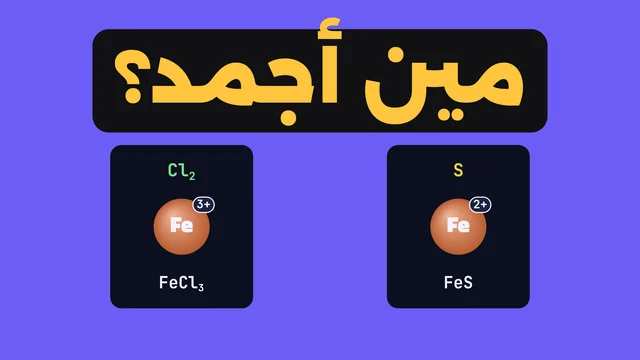
2. Chlorine vs hydrochloric acid
Iron + chlorine gives iron(III) chloride, FeCl3. Hydrochloric acid, HCl, also contains chlorine.
Pick the right answer
Predict: what does iron give with dilute hydrochloric acid?
- A. FeCl3 + hydrogen
- B. FeCl2 + hydrogen
- C. No reaction
Explanation
Iron with dilute hydrochloric acid gives iron(II) chloride and hydrogen gas: Fe + 2HCl → FeCl2 + H2. The hydrogen produced reduces iron(III) to iron(II), so FeCl3 does not form here.
3. Iron dissolves in dilute acids
gatheredFe(s) + H2SO4(aq) →[(dil)]\\ FeSO4(aq) + H2(g)gathered
gatheredFe(s) + 2HCl(aq) →[(dil)]\\ FeCl2(aq) + H2(g)gathered
Iron dissolves in dilute mineral acids producing iron (II) salts.
Mineral acids
Inorganic acids, such as hydrochloric acid (HCl) and sulphuric acid (H2SO4).
4. Why iron(II), not iron(III)?
The book: iron (II) salts form, not iron (III) salts, which are reduced by the produced hydrogen.
- Fe + dilute acid → H2 gas forms (iron displaces H)
- H2 gas forms → iron(III) is reduced (H2: reducing agent)
- iron(III) is reduced → iron(II) salt (+3 → +2)
5. Worked, then faded
- Iron gives an iron(II) salt: Fe²⁺.
- Sulphuric acid gives sulphate, SO4²⁻: so FeSO4.
- The other product is hydrogen gas, H2.
- Write (dil) over the arrow, and the states.
Fill in the blanks
Now a new acid, dilute hydrobromic acid: Fe + 2HBr → _____ + H2
Explanation
An iron(II) salt again: FeBr2, with hydrogen gas.
6. Give the reason
Pick the right answer
Give reason: iron reacts with dilute acids to produce iron (II) salts, not iron (III) salts.
- A. The hydrogen produced reduces iron (III) to iron (II).
- B. Iron has no +3 oxidation state.
- C. Iron (III) is unstable, so it never forms.
- D. Dilute acids contain no chlorine or sulphate.
Explanation
The book's reason: iron dissolves in dilute mineral acids giving iron(II) salts, because the hydrogen produced reduces iron(III) to iron(II).
Sort into groups
Does iron end as iron(II) or iron(III)?
Iron + chlorine, heatedIron + dilute HClIron + sulphur, heatedIron + dilute H2SO4
7. Summary
- Iron dissolves in dilute mineral acids: iron (II) salt + hydrogen.
- Fe + H2SO4 → FeSO4 + H2 and Fe + 2HCl → FeCl2 + H2.
- Reason: the produced hydrogen reduces iron (III) to iron (II).
- Contrast: chlorine gas gives FeCl3.
Can you explain why HCl gives FeCl2, but chlorine gives FeCl3?
Reveal
With HCl, hydrogen forms, and the produced hydrogen reduces iron (III) to iron (II): so FeCl2 forms. Chlorine gas forms no hydrogen, so iron ends as FeCl3.