Metal + dilute acid
Salt and hydrogen gas
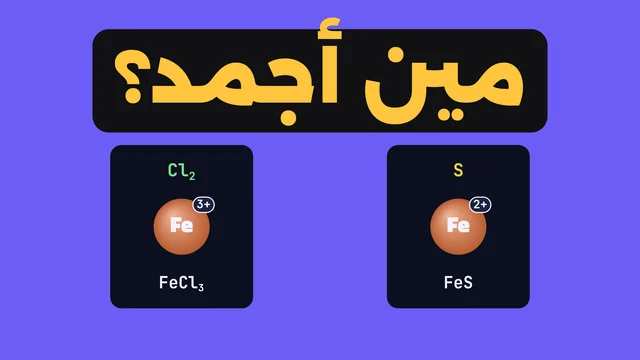
1. Properties of iron
2. What is the fizz?
Drop zinc into dilute hydrochloric acid. Bubbles of gas rise, and the zinc slowly disappears.
Pick the right answer
Predict: which gas is in the bubbles?
- A. Hydrogen
- B. Oxygen
- C. Chlorine
- D. Carbon dioxide
Explanation
The bubbles are hydrogen gas, and it comes from the acid: zinc takes the place of the hydrogen in HCl, forming the salt zinc chloride, and the hydrogen leaves as H2 gas.
3. Salt + hydrogen
gatheredZn(s) + 2HCl(aq) →\\ ZnCl2(aq) + H2(g)gathered
The metal takes the place of the hydrogen in the acid. The hydrogen comes off as a gas.
Only metals above hydrogen in the activity series do this. Copper does not.
4. Worked: magnesium + sulphuric acid
- Salt name: the metal + the acid's ending. H2SO4 gives sulphate: magnesium sulphate.
- Formula: Mg is +2 and SO4 is −2, so MgSO4.
- The gas is hydrogen, H2.
- Check the atoms: 1 Mg, 2 H, 1 S, 4 O on each side.
gatheredMg(s) + H2SO4(aq) →\\ MgSO4(aq) + H2(g)gathered
Fill in the blanks
Now you: zinc + dilute sulphuric acid → zinc _____ + _____ gas.
Explanation
Zinc + dilute sulphuric acid → zinc sulphate + hydrogen gas. The salt's ending comes from the acid (H2SO4 gives sulphate), and the hydrogen of the acid leaves as H2 gas when zinc takes its place.
5. Metal or metal oxide?
Metal + dilute acid
gatheredMg + 2HCl →\\ MgCl2 + H2gathered
salt + hydrogen: it fizzes
Metal oxide + acid
gatheredMgO + 2HCl →\\ MgCl2 + H2Ogathered
salt + water: no gas
6. Your turn
Balance the equation
Aluminum reacts with dilute hydrochloric acid. Balance the equation.
Al + HCl → AlCl3 + H2
Balanced equation
2Al + 6HCl → 2AlCl3 + 3H2
Explanation
2 Al need 6 Cl: 6 HCl. Those 6 H atoms leave as 3 H2.
Need a hint?
- Balance Cl first: how many HCl give the 3 Cl in one AlCl3?
- Now count the H on the left. Each H2 takes two. Is that a whole number?
- If not, double every coefficient.
Pick the right answer
Which pair gives a salt and hydrogen gas?
- A. Calcium + dilute hydrochloric acid
- B. Copper + dilute hydrochloric acid
- C. Copper (II) oxide + dilute sulphuric acid
- D. Calcium oxide + dilute hydrochloric acid
Explanation
Calcium and dilute hydrochloric acid give a salt (calcium chloride) and hydrogen gas, because calcium is above hydrogen in the activity series. Copper is below hydrogen, so it does not displace it from the dilute acid, and a metal oxide with an acid gives a salt and water, with no gas.
7. Summary
- Active metal + dilute acid → salt + hydrogen gas.
- Only metals above hydrogen in the activity series react this way.
- Metal oxide + acid → salt + water, with no gas.
Can you explain why a metal gives hydrogen with a dilute acid, but its oxide gives water?
Reveal
The metal takes the place of the hydrogen in the acid, so the hydrogen comes off as a gas. In a metal oxide, the oxygen joins the acid's hydrogen and forms water, so no gas is given off.