Alloys: definition and preparation
Two metals or more, or a metal with a non-metal; made by melting or by electro-deposition
1. Alloys and their types
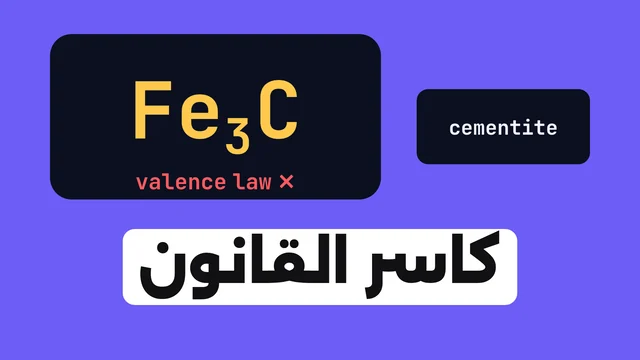
2. Metals only?
You met two hard iron materials: ferromanganese in railway tracks, and steel in bridges and car bodies.
Pick the right answer
Predict: which one contains a non-metal?
- A. Ferromanganese
- B. Steel
- C. Both
- D. Neither: alloys contain metals only
Explanation
Steel contains a non-metal: it is iron with carbon, and it is still an alloy. Ferromanganese is iron with manganese, two metals.
3. What an alloy is
Alloy
Alloys are usually formed from two metals or more, and may consist of a metal and a non-metal, such as carbon (steel).
| Alloy | Made of | Kind |
|---|---|---|
| Ferrochromium | Fe + Cr | metal + metal |
| Ferromanganese | Fe + Mn | metal + metal |
| Ferrovanadium | Fe + V | metal + metal |
| Ferronickel | Fe + Ni | metal + metal |
| Steel | Fe + C | metal + non-metal |
So an alloy is not always metals only: steel contains carbon.
Alloys you met in the uses lessons
- Ferromanganese: railway tracks, because it is harder than steel.
- Nickel-chromium: heating coils and electric furnaces.
- Aluminum-manganese: soft drink cans.
- Bronze: copper with tin.
4. Not always a compound
Here, atoms of two metals share one solid. No new compound forms.
5. Method 1: by melting
- The metals (solids) → Melt them together
- Melt them together → Leave to cool gradually
- Leave to cool gradually → A solid alloy
Alloys are usually prepared by melting the metals together and leaving them to cool gradually.
The metals mix while they are liquid.
6. Method 2: by electro-deposition
Electro-deposition
Depositing two metals or more at the same time from a solution of their ions, using an electric current.
Kinds of metal ions in the solution 1
Copper ions only: a copper coat. One metal is not an alloy.
Book example: electroplating iron handles with brass, from a solution of copper and zinc ions.
7. Sort the methods
Decide how each one is made. Careful: some are not alloys at all.
Sort into groups
How is each product made?
Copper and tin are melted together, then left to cool gradually.A current deposits nickel and iron at the same time from a solution of their ions.Aluminum and manganese are melted together, then cooled gradually.A key is coated from a solution of copper ions only.Zinc is melted on its own and poured into a mould.
8. Check yourself
Pick the right answer
Metal X is mixed with a little of non-metal Y in one solid. A student says: "Y is a non-metal, so this cannot be an alloy." Is the student right?
- A. No: an alloy may consist of a metal and a non-metal
- B. Yes: alloys contain metals only
- C. Yes: a metal and a non-metal always form a compound
Explanation
An alloy may consist of a metal and a non-metal, so a non-metal in it does not rule out an alloy. Steel, iron with carbon, is the book's example.
True or false?
Every alloy is a chemical compound of its elements.
Explanation
Of the book's three types, the elements combine chemically into a compound in intermetallic alloys. In interstitial and substitutional alloys, the atoms are mixed in one solid without forming a compound.
Fill in the blanks
By melting: the metals are melted together and left to cool _____. By electro-deposition: two metals or more deposit at the same _____.
Explanation
By melting, the metals are melted together and left to cool gradually. By electro-deposition, two metals or more deposit at the same time, as when iron handles are coated with brass (Cu + Zn).
9. Summary
- Alloy: usually two metals or more, or a metal with a non-metal (steel).
- By melting: melt the metals together, then leave them to cool gradually.
- By electro-deposition: two metals or more deposit at the same time.
- An alloy is not always a compound.
Back to the hook: can you explain why steel is an alloy, though carbon is not a metal?
Reveal
Steel is iron with carbon. An alloy is usually formed from two metals or more, but it may consist of a metal and a non-metal, such as carbon in steel.