Iron: abundance and suitability of iron ore
Where iron is found, and which ore is worth using
1. Iron ores and extraction of iron
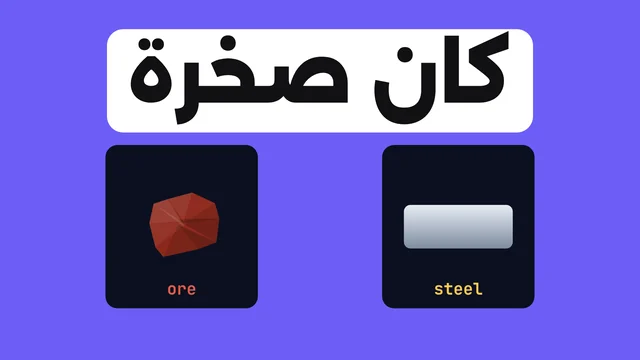
2. Important, but how common?
⁵⁶₂₆Fe\;:\;[Ar]\,4s²\,3d⁶
Iron is the most important metal in heavy industries. Bridges, cars and machines need it.
Pick the right answer
Predict: is iron also the most abundant element in Earth's crust?
- A. Yes: we use so much iron, it must be the most common
- B. No: three elements are more abundant than iron
- C. No: iron is rare, under 1% of the crust
Explanation
Iron is not the most abundant element in the crust: it is the fourth most abundant, after oxygen, silicon and aluminum, and forms about 5% of the crust by mass. Being the most used metal does not make it the most common.
3. Fourth in the crust
Iron is the fourth most abundant element in Earth's crust, after oxygen, silicon and aluminum.
Iron in Earth's crust 5% by mass
4. Pure metal? Only from space
Meteorites (rocks from space)
Iron is found as pure metal (90%) only in meteorites.
Earth's crust
Iron is found in natural ores, not as metal.
Iron ore
A natural material in the earth's crust that contains iron compounds, mostly iron oxides, mixed with impurities (unwanted substances).
- Iron ore: iron compounds + impurities → Extraction
- Extraction → Iron metal
5. Rank the crust's elements
Quick recall before we move on.
Put in order
Order these elements from most to least abundant in Earth's crust.
- Oxygen
- Silicon
- Aluminum
- Iron
6. Is this ore worth using?
Not every iron ore is worth extracting. The first factor in its suitability:
- 1) The iron percentage in the ore.
Is the iron percentage enough?
- 2) The composition of the impurities in the ore.
- 3) The type of harmful elements mixed with the ore, such as sulphur, phosphorus and arsenic.
7. Meteorite or mine?
Pick the right answer
A lump of metal that is 90% iron is found lying on the ground. Where did it most likely come from?
- A. From space: it is a meteorite
- B. From an iron ore deposit in the Western Desert
- C. From deep in the crust, where iron is more abundant
Explanation
The lump most likely came from space as a meteorite: iron is found as pure metal (90%) in meteorites. In the crust, iron is found in ores, iron compounds (mostly oxides) mixed with impurities, not as lumps of metal.
True or false?
Iron is the most abundant metal in Earth's crust.
Explanation
The statement is false: aluminum is more abundant than iron in Earth's crust. Iron is the most important metal in heavy industries, but it is the fourth most abundant element, after oxygen, silicon and aluminum.
8. Pick the better ore
| Ore X | Ore Y | |
|---|---|---|
| Iron % | 62 | 55 |
| Harmful elements (S, P, As) | high | very low |
Pick the right answer
A student says: "Ore X is surely more suitable, because it has more iron." What is the best reply?
- A. Correct: the iron percentage is the only factor
- B. Not so fast: the harmful elements and the impurities also decide suitability
- C. Wrong: an ore with less iron is always easier to use
Explanation
The best reply is that the iron percentage is not the only factor: the suitability of an ore also depends on the composition of its impurities and on the harmful elements mixed with it. Ore X has more iron, but it carries a lot of sulphur, phosphorus and arsenic.
Fill in the blanks
Name one harmful element that can be mixed with an iron ore: _____
Explanation
The book names sulphur, phosphorus and arsenic as harmful elements that can be mixed with an iron ore; any one of them answers the blank.
9. Summary
- Iron: 4th most abundant in the crust, after O, Si and Al. It forms 5% by mass.
- Pure iron metal (90%): only in meteorites. In the crust: ores, iron compounds (mostly oxides) mixed with impurities.
- Ore suitability: iron %, composition of impurities, harmful elements (S, P, As).
Can you explain why an ore rich in iron might still be a poor choice?
Reveal
Suitability is decided by three factors, not by the iron percentage alone: the composition of the impurities and the harmful elements mixed with the ore (sulphur, phosphorus, arsenic) count too.