Ionic and covalent bonds
Give electrons or share them
1. Ionic and covalent bonds: from zero
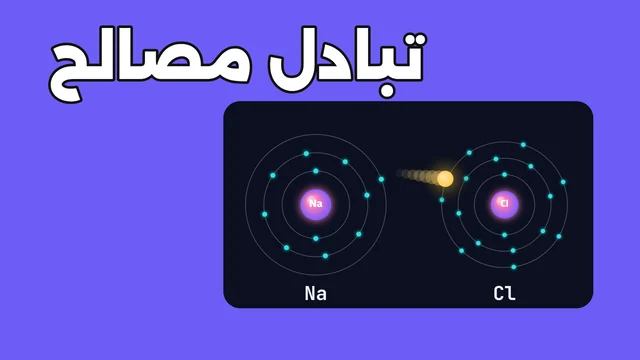
2. Metal plus poison gas
Sodium is a soft, reactive metal. Chlorine is a poisonous gas. Together they make table salt.
Pick the right answer
Predict: what holds sodium and chlorine together in table salt?
- A. Attraction between a positive ion and a negative ion
- B. A pair of electrons shared by the two atoms
- C. Nothing: they are only mixed
Explanation
Sodium gives an electron to chlorine, forming a positive sodium ion and a negative chloride ion. The attraction between these opposite ions, the ionic bond, holds table salt together.
3. Ionic bond
- Na (2, 8, 1) → Na+ (2, 8) (loses 1 electron)
- Cl (2, 8, 7) → Cl- (2, 8, 8) (gains 1 electron)
- Na+ (2, 8) → Na+ and Cl- attract
- Cl- (2, 8, 8) → Na+ and Cl- attract
Ionic bond
The electrostatic attraction between a positive ion and a negative ion, formed by transfer of electrons.
Both ions now have a stable outer level, like a noble gas.
4. Covalent bond
Covalent bond
A bond formed by sharing pairs of electrons between two atoms.
Each chlorine atom has 7 outer electrons and needs one more. Neither gives one away, so they share a pair.
5. Transfer or share?
Sort into groups
Sort each substance by the bond between its atoms.
MgO: magnesium (metal) and oxygenH2O: hydrogen and oxygenKBr: potassium (metal) and bromineCH4: carbon and hydrogenO2: two oxygen atoms
6. Summary
- Ionic bond: one atom gives electrons, the other takes them; the oppositely charged ions attract.
- Covalent bond: two atoms share pairs of electrons.
- Next: metal atoms bond to each other in a third way, the metallic bond.
Can you explain why sodium and chlorine form ions, but two chlorine atoms share?
Reveal
| Atoms | What happens | Bond |
|---|---|---|
| Na (2, 8, 1) + Cl (2, 8, 7) | Na gives 1 electron to Cl | Ionic bond |
| Cl (2, 8, 7) + Cl (2, 8, 7) | Neither gives one away, so they share a pair | Covalent bond |
Sodium loses its 1 outer electron and chlorine gains it: Na+ and Cl- form and attract. Each chlorine atom has 7 outer electrons and needs one more, so two chlorine atoms share a pair.